Fridge or Freezer First? A Practical Guide for a Small Apartment
Decide whether a refrigerator, freezer, or combined appliance fits your first apartment, then use a bounded eat-first check for food you already own.
Published by Eco Tiny Living Hub
Reviewed under our editorial and corrections policy.
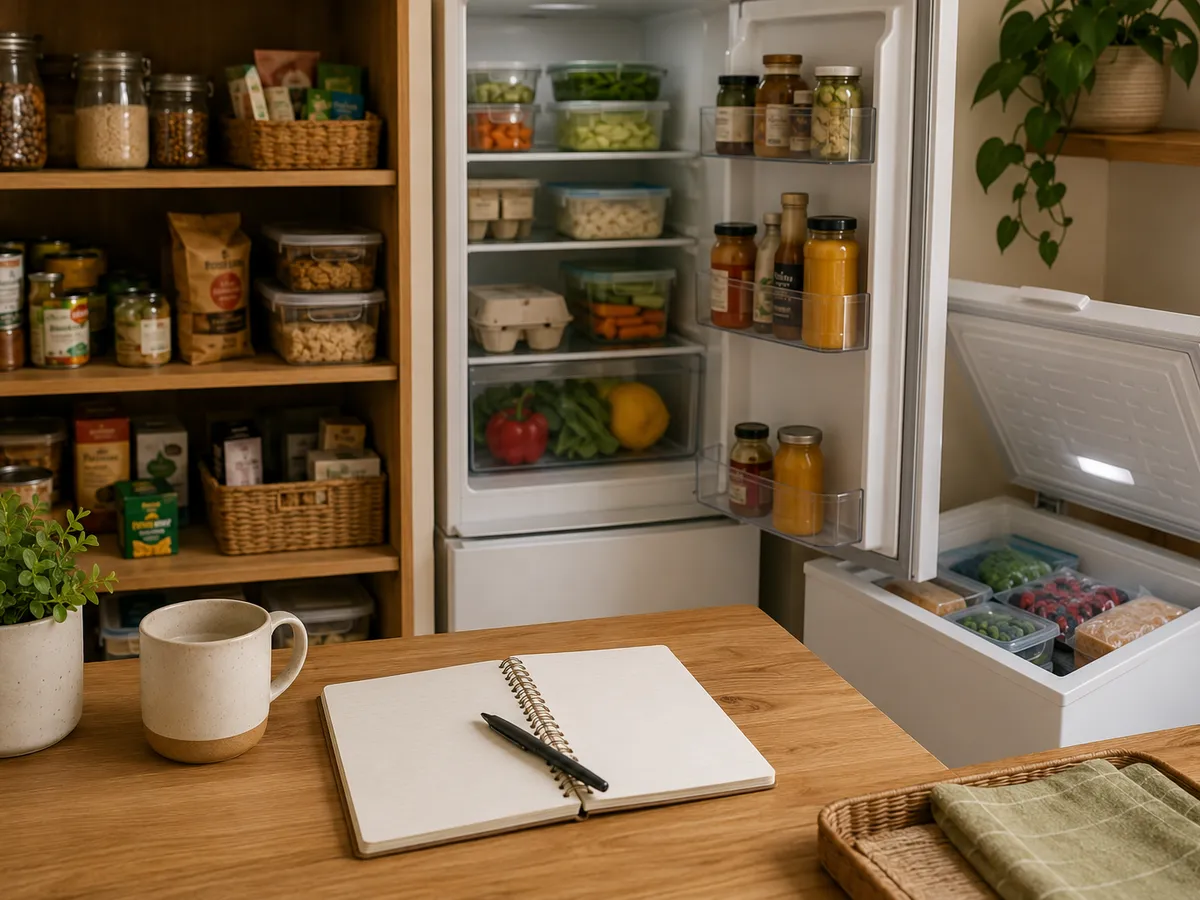
For most first apartments, confirm what refrigeration is already included before buying anything. If no appliance is provided, a refrigerator with a freezer compartment is usually the more flexible first purchase because it supports everyday refrigerated food while preserving some frozen-food capacity. A separate freezer makes more sense only when your household already has dependable refrigeration and a specific need for additional frozen storage.
Should you get a fridge or freezer first?
Start with the lease, the available space, the electrical requirements, and the foods you actually use. Many rentals already include a refrigerator, and an extra appliance may be restricted by the lease or impractical for the outlet and ventilation available. Do not purchase a freezer merely because bulk storage sounds economical; it adds cost, floor space, energy use, and a need to keep an inventory.
Compare the practical tradeoffs
| Situation | Likely first step | Check before deciding |
|---|---|---|
| The apartment includes neither appliance | Look first for a refrigerator with a freezer compartment. | Measure the opening, door swing, ventilation clearance, outlet, delivery path, and lease rules. |
| The apartment already includes a working refrigerator | Use its freezer space before adding another appliance. | Track whether frozen storage is genuinely limiting for several weeks. |
| The refrigerator has no freezer compartment | Choose based on the food you routinely store, not hypothetical bulk purchases. | Compare a compact freezer with replacing or supplementing the refrigerator only if the lease permits it. |
| Space, budget, or power is tight | Delay the extra appliance and adapt shopping frequency where practical. | Avoid extension cords and follow the appliance manufacturer’s installation requirements. |
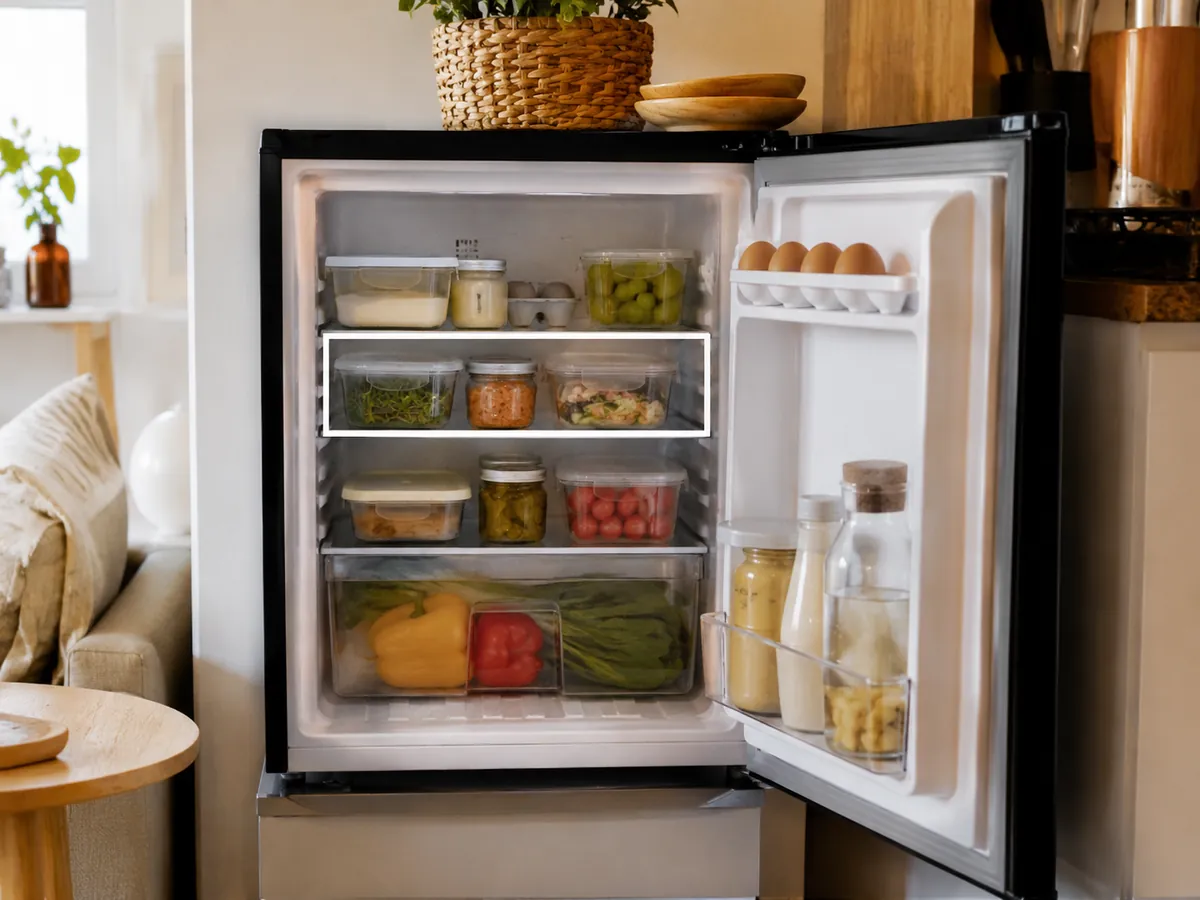
Once the appliance decision is settled, an eat-first area can make already-purchased food more visible. It is not a safety classification: food placed there is not automatically safe, unsafe, fresh, or spoiled. The useful task is smaller than cleaning out the refrigerator or creating a meal plan.
What an eat-first area is—and is not
Choose a small group of refrigerated or frozen items that you want the household to notice before making the next meal or shopping decision. Keep the label organizational. Use authoritative food-safety guidance separately for any question about whether an item should be eaten, frozen, retained, or discarded.
Look only at what is currently present
- Open one refrigerator shelf, drawer, or freezer section rather than emptying the appliance.
- Notice what is visible, what belongs to someone else, and what needs a household conversation before moving.
- Keep raw foods separate and avoid moving a package if its directions, seal, container, or storage position matters.
- Do not taste food to decide whether it is safe, and do not use smell or appearance alone as a safety test.
Choose one bounded visible area
Group only what fits safely and can remain cold as directed. A clear shelf, shallow tray, or existing container may be enough. No special organizer is required, and the group can be as small as one item or no items if moving food would create a problem.
Separate organization from food-safety decisions
USDA/FSIS guidance covers clean, separate, cook, and chill steps, including prompt refrigeration and specific leftover guidance. Those instructions are not a universal eat-first routine. For a food-specific question, use FoodKeeper, the package, the manufacturer, or current FDA/USDA guidance rather than an organizational label.
See USDA/FSIS food-safety basics for narrow temperature, leftover, and raw-food boundaries.
For freezing and refreezing questions, consult FSIS freezing guidance.
FDA explains that date labels are not uniform and that, except for infant formula, many packaged-food dates are quality-oriented. A date, smell, appearance, or organizational grouping alone does not determine safety.
Read FDA's food-storage and date-label guidance for the distinction between quality and safety.
Choose a next decision
| Option | What it means | Boundary |
|---|---|---|
| Use | Choose the item for a meal only if current food-safety and package guidance support that decision. | The eat-first label is not the reason it is safe. |
| Freeze where appropriate | Follow the package, manufacturer, FoodKeeper, and current agency guidance. | Do not assume every food or container freezes well. |
| Retain | Leave the item where it is when moving it would create a problem. | A visible cue is optional. |
| Seek guidance | Ask the manufacturer or consult FDA, USDA/FSIS, or FoodKeeper. | Do not substitute social media or memory for current guidance. |
| Discard | Use the applicable safety or package direction when the item should not be retained. | Do not taste-test questionable food. |
| Take no action | Stop when the check is not safe, useful, or possible today. | An unfinished check is a valid outcome. |
Adapt for shared kitchens and limited capacity
Ask before moving another person's food. A shared note, a conversation, or leaving everything in place may be better than silently rearranging it. If reach, lifting, grip, vision, fatigue, illness, freezer access, caregiving, or pain limits the check, work with one item, ask for help, or pause. No article can determine the right accommodation for every household.
Stop before the task becomes a full refrigerator overhaul
Stop after one bounded area. You do not need to wash shelves, buy bins, rewrite every date, plan meals, or empty the freezer to complete this check. Restore the previous arrangement, leave it unchanged, or return later if that is the better fit.
Sources and limits
This is an organizational visibility exercise, not a food-safety routine, storage-time chart, nutrition article, cleanout challenge, or food-waste promise. FoodKeeper, package directions, manufacturer instructions, and current FDA/USDA guidance remain controlling. The article does not promise savings, convenience, time, stress, habit success, improved safety, sustainability, or universal fit.
Read ETLH's editorial and corrections policy if a source or passage needs review.
Found something we should correct?
Send the article title, the passage in question, and any supporting source through our contact page. Material corrections will be made transparently.