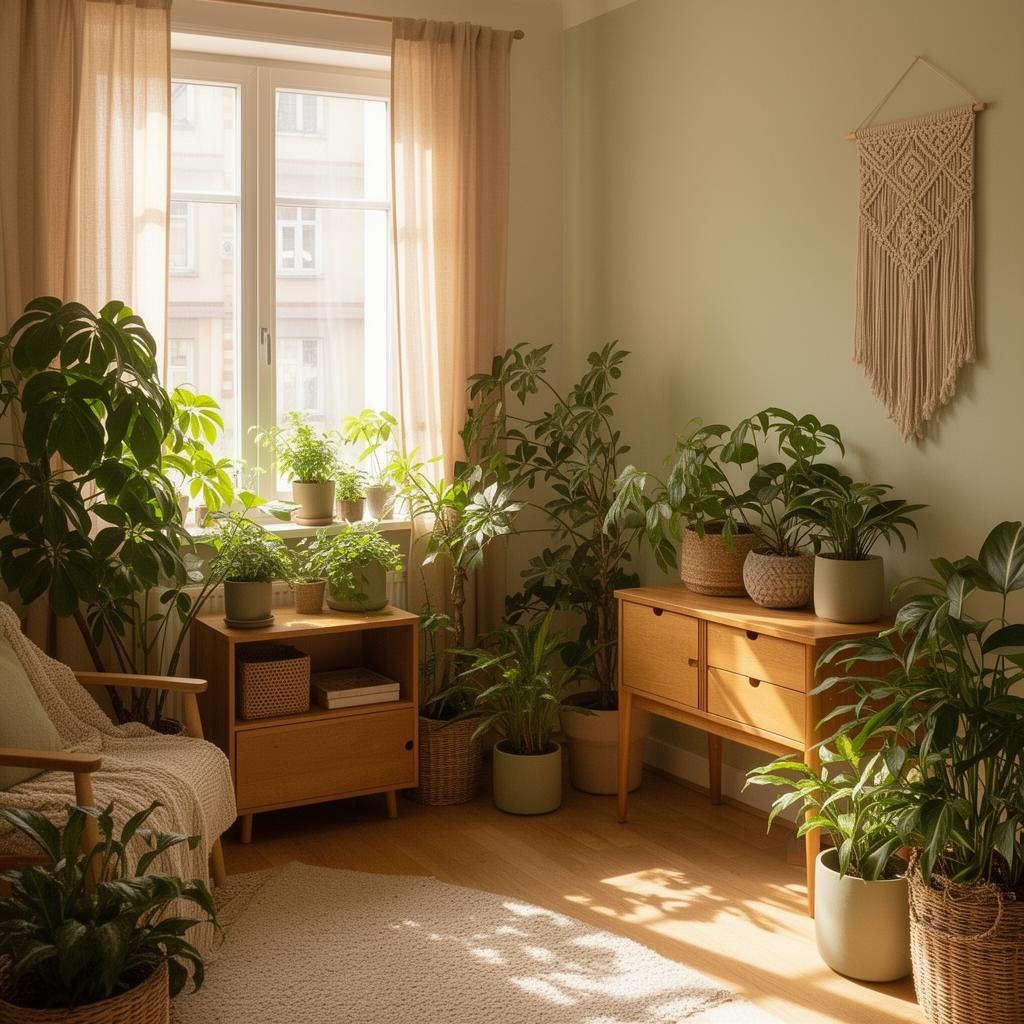
Illustrative Small-Apartment Room Reset Plan
Use an illustrative room scenario to organize layout, storage, lighting, and purchase-pause decisions without treating it as a documented transformation.
Published by Eco Tiny Living Hub
Reviewed under our editorial and corrections policy.
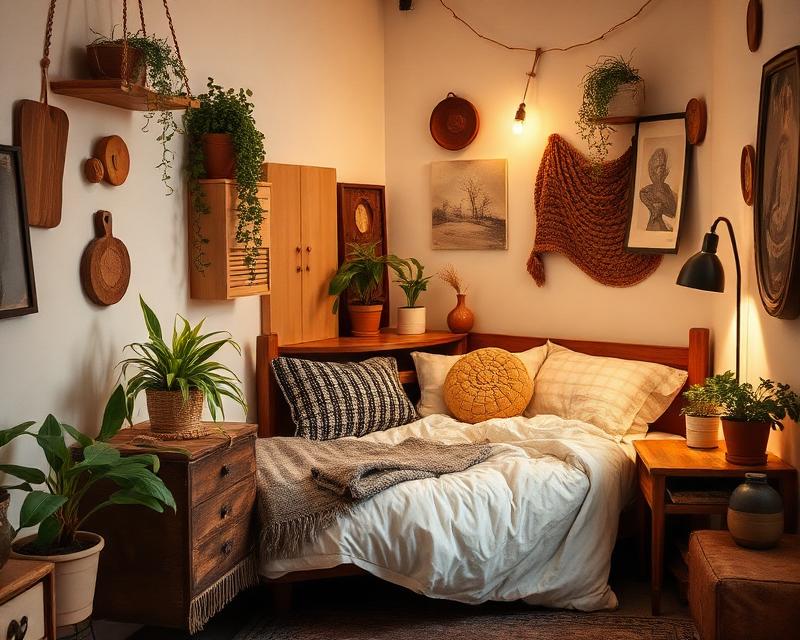
This article is an illustrative planning guide, not a documented before-and-after project. The room and image are examples meant to show how a small-space reset could be approached.
The useful idea is not to copy a finished look. It is to work through the room in a practical order: remove what is creating friction, improve the layout, reuse what already works, and replace only what clearly earns its place.
An Illustrative Starting Point
Imagine a rental living room with decent natural light but a few recurring problems: furniture blocks the easiest walking path, small items collect on every surface, storage is visible and scattered, and overhead lighting makes the room feel flat at night.
- Furniture is arranged around habit rather than the room's actual traffic flow.
- Loose items have no obvious place to return to.
- Several small storage pieces create more visual noise than useful capacity.
- The room relies on one harsh light source instead of a few purposeful layers.
Set Priorities Before Buying
Start with the room’s actual tasks and constraints. Costs vary by location and what you already own, so this example does not promise a budget or outcome.
- Reuse, repair, sell, donate, or repurpose before buying replacements.
- Measure the room and the furniture before bringing anything new home.
- Prioritize one or two functional changes instead of trying to restyle the entire room at once.
Test the Layout Without Buying
Use a paper sketch, painter’s tape, or temporary rearrangement to compare options. This is a test, not proof that the room will feel larger, calmer, or more functional.
- Sort loose items into keep, relocate, donate, sell, and recycle groups where local rules allow.
- Test the seating along the longest practical wall or toward the strongest natural focal point.
- Leave the entry and main walking path visually open instead of filling every available edge.
Evaluate Furniture You Already Have
Before replacing anything, identify the specific function or footprint problem. A purchase is optional and should follow a verified need, not a material label or trend.
- Check whether current seating can move without blocking required paths or access.
- Compare any possible table or storage piece by footprint, cleaning, installation, return terms, and household use.
- Do not drill, mount, anchor, alter wiring, or move a heater without lease, building, manufacturer, and safety checks.
Use Lighting and Textiles With Restraint
Treat lighting and textiles as optional choices to test against care, access, glare, ventilation, and the room’s actual use. They do not establish a wellbeing or spatial outcome.
- Use a rug only when it does not create a trip or maintenance problem.
- Use existing lamps or fixtures according to manufacturer instructions and do not alter electrical fittings.
- Refresh usable cushions with washable covers or leave them unchanged if that is the better fit.
Add Storage Only When It Fits
Finish only after the layout test identifies a real storage need. A plant, basket, or wall detail is optional and does not prove a room is healthier, calmer, or more sustainable.
- Use one existing basket or container for items that otherwise spread across surfaces.
- Choose a plant only when light, care, household, and pet-safety needs make it appropriate.
- Leave a wall open or add one item only when it serves the room’s actual use; do not install without permission and safe anchoring.
This illustrative example is a planning sequence, not proof that one look, product list, or budget works for every apartment. Keep the test, revise it, restore the original arrangement, or do nothing.
For measurement and pathway planning, see the small living room layout planning guide.
For a shorter no-purchase reset, see the small-apartment reset checklist.
Found something we should correct?
Send the article title, the passage in question, and any supporting source through our contact page. Material corrections will be made transparently.