Drying Clothes in a Small Apartment: Plan the Space Before You Hang a Load
Test one temporary indoor drying location around care labels, doors, walkways, heat sources, ventilation, and building rules without promising faster drying or mold prevention.
Published by Eco Tiny Living Hub
Reviewed under our editorial and corrections policy.
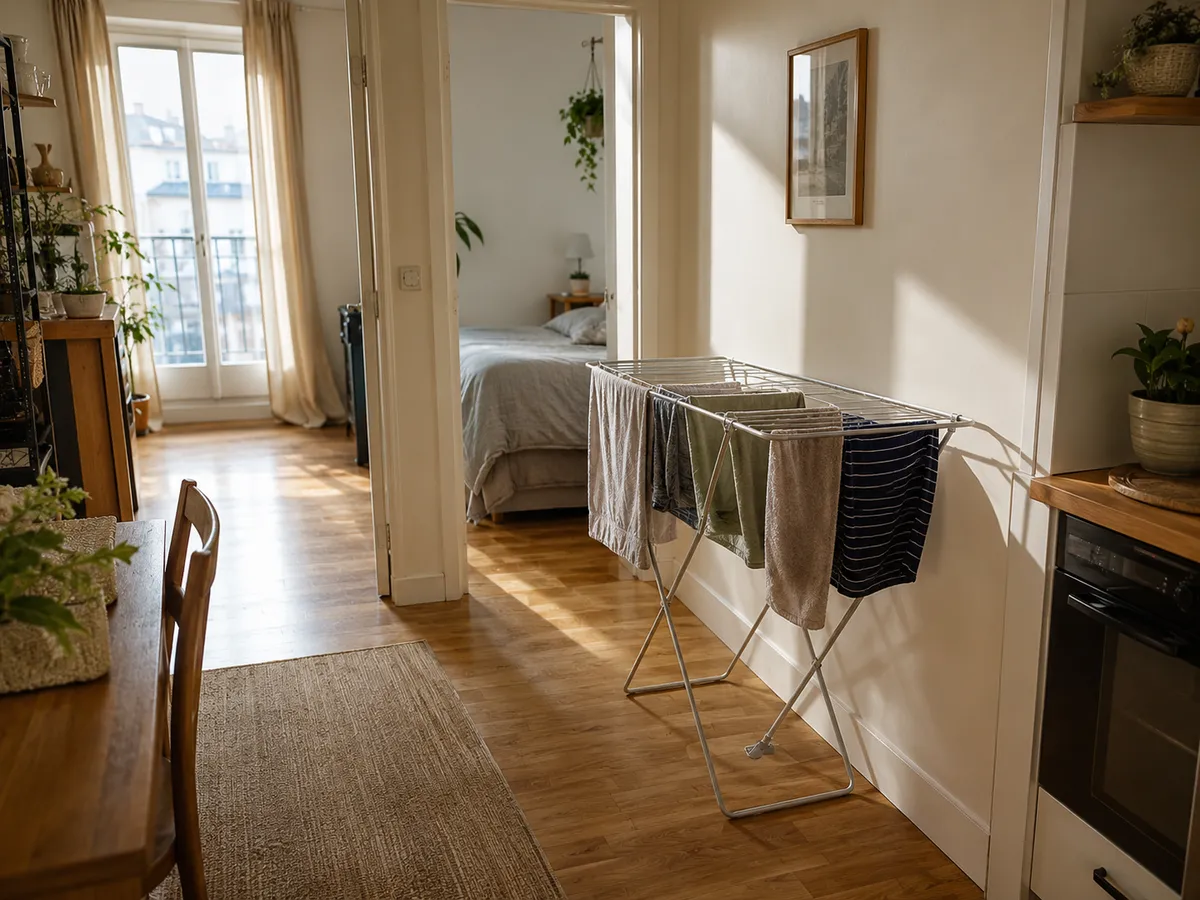
To plan where to dry clothes in a small apartment, check the garment care label, then test one temporary location that leaves doors, exits, walking routes, and appliances accessible. Keep clothing away from heat-producing equipment, check existing dampness and building rules, and use an approved alternative when the space does not work.
Quick indoor drying-space check
- Check each garment's drying instructions before choosing a location.
- Test the rack footprint and door swings before adding wet clothing.
- Keep exits, needed routes, and appliance access clear; keep clothing away from heat sources.
- Pause if the room is already damp or has recurring condensation, and follow the building's reporting process.
- Choose a modest load that fits the available space and your capacity; use an approved alternative if it does not fit.
A drying-space plan asks whether one temporary location can hold a modest load without blocking daily movement or ignoring the garment’s care instructions. It does not diagnose mold, establish a humidity target, make every room suitable, or promise faster drying, lower bills, longer garment life, or better indoor air.
What a drying-space plan can and cannot determine
Drying wet laundry indoors adds moisture to the air, and the amount varies with the load, fabric, machine cycle, room, and ventilation. The plan organizes a decision; it does not guarantee drying performance or moisture safety.
Read the garment care label first
Garment care labels provide item-specific drying instructions. Follow the label and manufacturer guidance rather than treating one fabric, cycle, or rack position as universal.
The FTC’s Care Labeling Rule guidance explains why care instructions belong with the garment.
Choose one temporary drying zone
Choose a location that can be set up and removed without claiming a permanent room function. Keep the load modest enough to preserve a clear route, and leave a no-action option when the available space does not work.
Preserve doors, walkways, exits, and appliance access
Check door swings, exits, stairs, cooking areas, appliance access, and mobility-device pathways before placing a rack. Temporary does not mean harmless to circulation.
Keep clothing away from radiators and heat-producing equipment
Do not place garments or a rack directly on radiators, heaters, ovens, lamps, or other heat-producing equipment. Follow the equipment and building instructions when the safe distance is unclear.
Check ventilation and existing condensation before adding wet laundry
Notice the room’s existing conditions before adding wet clothing. When dampness, leaking, recurring condensation, or widespread mold is already present, pause the drying plan and use the building’s reporting process or seek qualified guidance. Do not identify mold types or provide remediation instructions.
Review lease, balcony, and building restrictions
Building, lease, balcony, and shared-space rules may limit drying options. Treat local rules as conditional and location-specific; do not generalize balcony rights or landlord responsibility.
Adapt for reach, grip, fatigue, children, pets, and mobility devices
A lower setup, help from another person, a smaller load, or a pause may fit better when reach, grip, fatigue, illness, caregiving, children, pets, or mobility devices change the task. These are options, not a universal accessibility prescription.
When indoor drying is not practical
Stop when the rack blocks an exit or needed route, touches a heat source, conflicts with care instructions or building rules, or adds wet laundry to an already damp room. Take no action, use an approved alternative, report a building condition, or seek qualified guidance.
For the stages before and after washing, plan where laundry waits in a studio apartment. Keep wet, waiting, and fully dry items distinct while following care instructions.
Keep supplies labeled and accessible with the small-apartment laundry product storage guide.
Sources and editorial limits
This article is a temporary-space planning guide, not mold remediation, health, ventilation treatment, appliance buying, energy, utility, or environmental advice. The FTC care-label guidance, garment instructions, appliance manuals, building rules, and qualified moisture guidance remain controlling.
See the U.S. Access Board clear-floor guidance for general access concepts.
Read ETLH’s room-reset planning example only for reversible space-planning framing; it is not moisture or building authority.
Found something we should correct?
Send the article title, the passage in question, and any supporting source through our contact page. Material corrections will be made transparently.