How to Choose an Apartment Food-Scrap Method
Compare collection, temporary storage, handoff, active processing, and appliance treatment so you can decide whether a food-scrap system fits your apartment now.
Published by Eco Tiny Living Hub
Reviewed under our editorial and corrections policy.
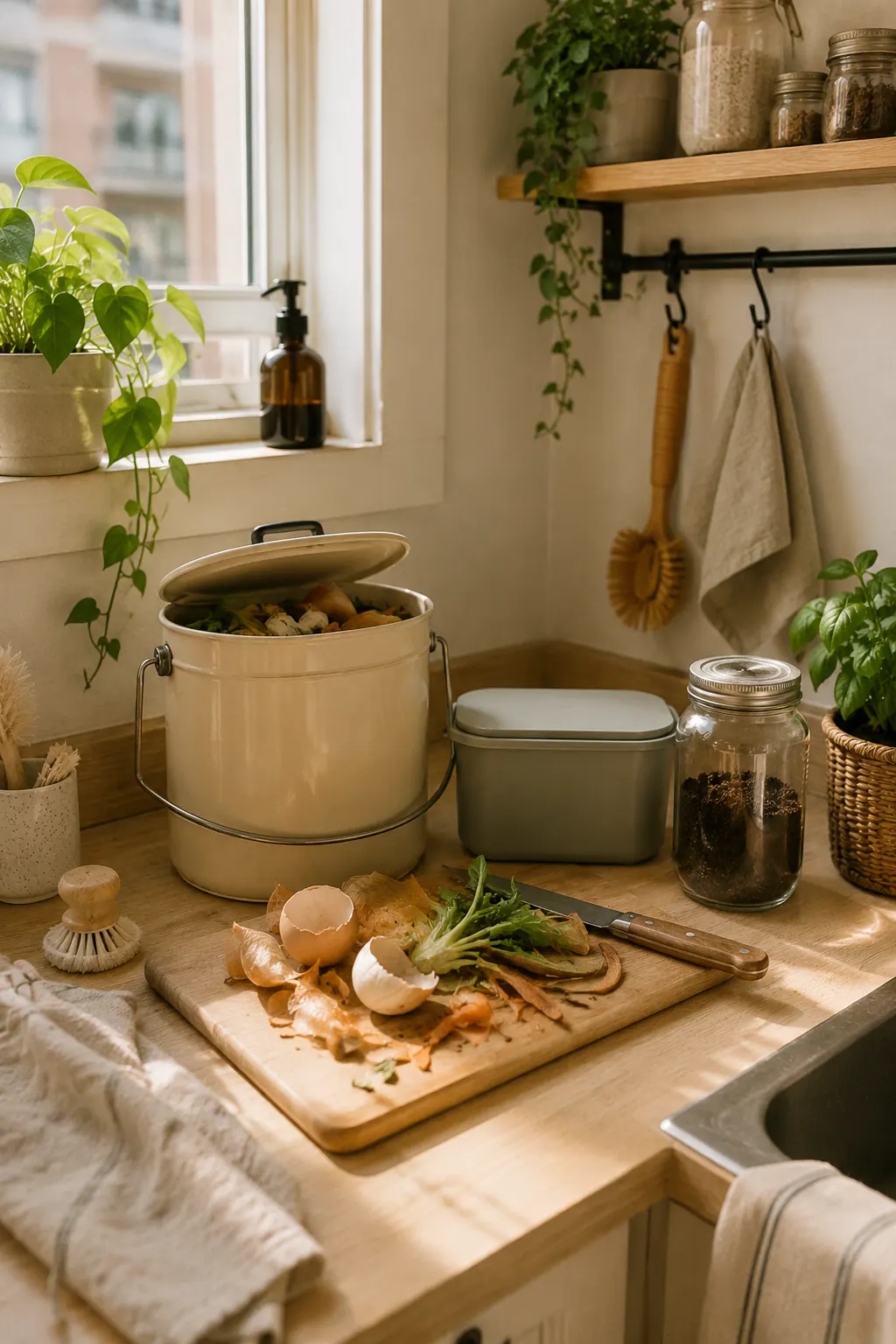
A food-scrap system is not one object on a counter. It is a chain: temporary storage, collection or processing, and a real handoff or finishing route. Start by checking the end of that chain. If you cannot name where the scraps can go next, a new bin is unlikely to solve the problem.
This guide is a decision process, not a universal recommendation. A building collection cart, a verified drop-off, a private collection service, a worm bin, bokashi with a finishing route, or no system for now can all be valid outcomes depending on your lease, building rules, local access, household agreement, storage, lifting, and maintenance capacity.
Start with the destination, not the container
Check your building manager, local government or waste authority, and any service you are considering for the current accepted-materials list, container rules, access hours, fees, and transfer instructions. EPA notes that collection can include curbside programs, private haulers, and drop-off sites; it does not mean each option exists where you live or accepts the same material.
EPA's overview of collection programs and composting approaches distinguishes collection from processing and describes curbside, private-hauler, and drop-off models. Use it as a map of possible models, not a directory of local services.
- If your building has collection, ask who controls access, what the cart accepts, where it is located, and when it is collected.
- If you are considering a community or municipal drop-off, verify that the site is open to you, what it accepts, and how you can carry scraps there. A farmers market, garden, or school is not automatically a drop-off.
- If you are considering a subscription service, verify its service area, pickup process, current terms, accepted materials, container requirements, and whether your building permits the handoff.
- If the destination requires outdoor space, soil burial, or a vehicle you do not have, record that as a constraint rather than assuming a workaround will fit.
Separate the steps in the system
| Step | What it can do | What it does not establish |
|---|---|---|
| Temporary storage | Holds scraps in a closed counter, refrigerator, or freezer container until the next step. | It does not turn scraps into compost. |
| Collection | Moves accepted scraps into a building cart, pickup service, or verified drop-off stream. | It does not prove that every local program accepts the same scraps, liners, or bags. |
| Transportation or handoff | Gets the stored material from the apartment to the collection or finishing destination. | It does not remove the need to plan carrying, timing, access, or household responsibility. |
| Active processing | Uses a managed system, such as a worm bin or another composting process, with its own operating conditions. | It is not passive storage and may not fit the available space or maintenance capacity. |
| Finished-compost handling | Uses biologically stable compost according to the system and site that produced it. | It cannot be assumed from collected scraps, fermented material, or appliance output. |
| Appliance treatment | May grind, heat, or dry food scraps and reduce their weight or volume. | It does not by itself produce compost or remove the need for an output destination. |
EPA defines compost as a biologically stable product of managed aerobic decomposition and explains that residential grinders and dehydrators produce a dried food-scrap mixture rather than compost. See EPA's composting definitions and home options.
Compare practical routes before buying anything
| Route | What must already be true | What you still need to manage |
|---|---|---|
| Building collection | Your building provides a usable, current collection route and its rules fit your scraps. | Container location, access, household sorting, and the trip from your unit to the cart. |
| Verified drop-off | A site accepts your material and is reachable on a cadence you can maintain. | Storage between trips, carrying or transportation, hours, and changes to the site rules. |
| Private collection | A service covers your address and your building permits the pickup or handoff. | Current service terms, pickup timing, container care, building access, and any recurring commitment. |
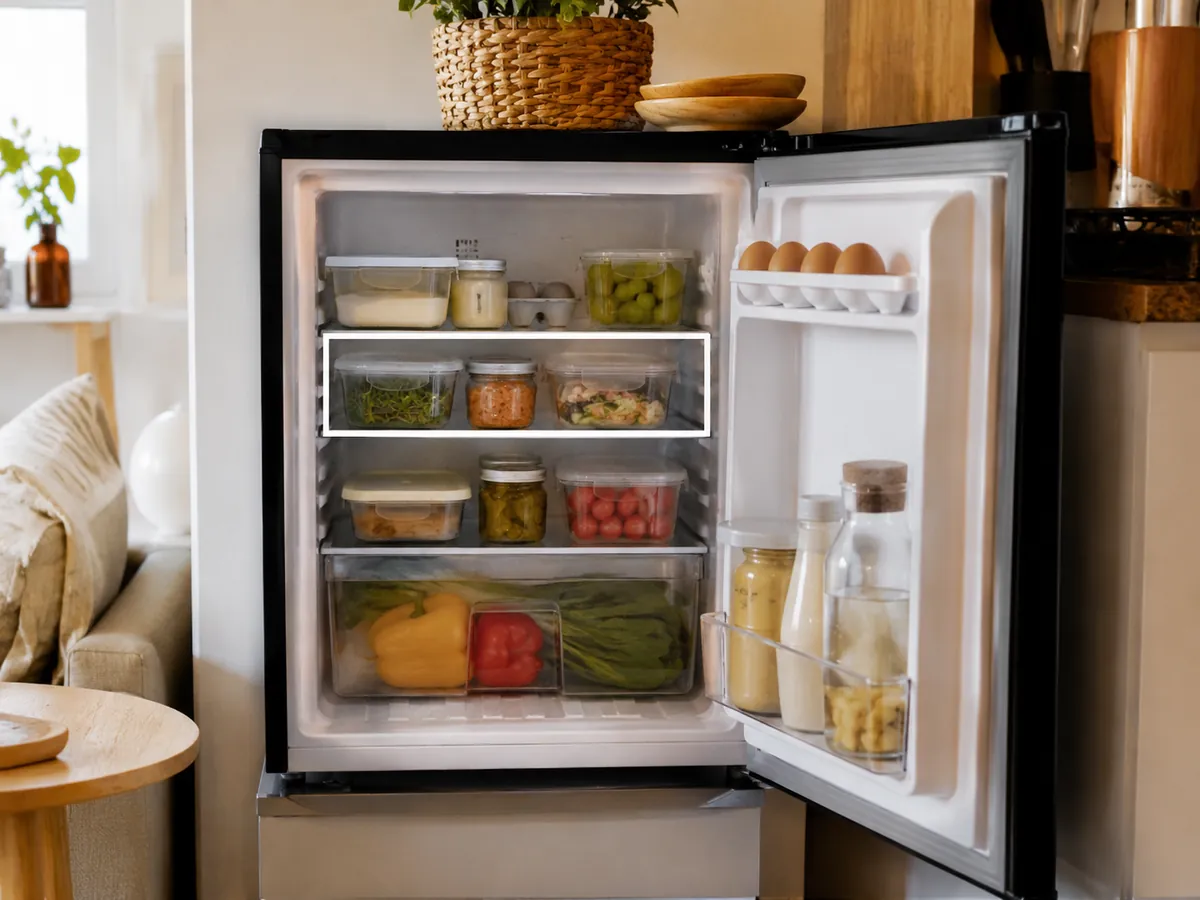
| Counter, refrigerator, or freezer staging | You have a confirmed downstream destination and a compatible place to hold scraps temporarily. | Cleaning, leaks, the space you give up, and a removal cue. Cold storage stages scraps; it is not composting. |
| Worm bin | You can provide the space, bedding, conditions, accepted inputs, and ongoing care required by the system. | Feeding, moisture, ventilation, temperature, and how you will handle the resulting material. |
| Bokashi | You have a sealed system, inoculant, and a verified way to finish the fermented material in soil or another composting system. | Drainage and care instructions, storage, and a finishing destination; fermented material is not finished compost. |
| Electric food-scrap appliance | You have a supported place for the appliance and an approved route for its output. | Electricity, noise, capacity, cleaning, filters or consumables where applicable, manufacturer instructions, building rules, and output handling. |
For bokashi specifically, Washington State University Extension describes a sealed anaerobic fermentation process and says the material needs a soil or compost-system finishing step. Read its bokashi guidance before treating it as an apartment-only solution.
Decide whether the route fits your apartment
- Space: Where will the temporary container, appliance, bedding, or supplies sit without blocking food storage, a sink, a counter, a walking path, or needed access?
- Control: Is the collection point, outdoor space, electricity, ventilation, or pickup location under your control, your building's control, or a service's control?
- Handoff: Who empties the container, on what cue, and how will the scraps get from the unit to the next destination?
- Household agreement: Does everyone who will use the system agree on accepted materials, cleaning, responsibility, and what happens when the route is unavailable?
- Maintenance: Can you reasonably clean the container or appliance, manage liners or filters only when required, and respond to leaks or a missed handoff?
- Access and safety: Can you lift, carry, reach, and clean the system safely? Check manufacturer instructions, building rules, and child, pet, allergy, and sensitivity considerations before adding equipment or chemicals.
If a temporary container starts smelling or attracting fruit flies, that is a troubleshooting problem, not proof that you need a different product. First check the destination, time indoors, residue, leaks, and cleaning instructions. The next guide focuses on that diagnosis.
Read Apartment Composting Odor & Fruit Flies: A Small-Space Fix when an existing food-scrap setup needs a reset.
When no route fits yet
Choose no food-scrap system for now if you cannot verify a destination, cannot safely store or hand off material, do not have household agreement, or the required maintenance does not fit your current capacity. That is a bounded decision, not a failure. Recheck only when a building rule, local service, transportation option, space, or household situation changes.
If your main concern is an electric appliance, pause the purchase decision until you can name what the appliance does, what output it creates, and where that output can go. A separate ETLH evaluation framework will address that category without ranking products or promising a result.
Sources and limits
This article uses EPA and extension guidance for definitions and process boundaries. It does not claim that food-scrap diversion is available in every building, that a method prevents odor or pests, or that one appliance or route has a superior environmental, cost, time, water, energy, or effort outcome. Local program rules and manufacturer instructions remain controlling.
For ETLH's sourcing and correction approach, read the editorial and corrections policy.
Found something we should correct?
Send the article title, the passage in question, and any supporting source through our contact page. Material corrections will be made transparently.