Zero-Waste Kitchen on a Budget: 9 Swaps to Evaluate
Evaluate nine kitchen swaps by replacement timing, local cost, expected use, care needs, and what you already own.
Published by Eco Tiny Living Hub
Reviewed under our editorial and corrections policy.
A lower-waste kitchen does not require a matching set of new products. This guide offers nine changes to evaluate, not nine purchases or guaranteed savings. Start with the item or routine you already use, then compare replacement timing, local price, expected use, storage, cleaning, utilities, and disposal options.
A suggestion may be useful for one household and impractical for another. Keep using a safe item that works, involve the people who share the kitchen, and follow package, appliance, lease, building, and local-program directions.
1. Evaluate Packaged Drinks and Reusable Options
Packaged drinks create packaging and a recurring purchase for households that buy them. Whether a reusable bottle, tap water, or a filter is suitable depends on local water guidance, the reason treatment is needed, upfront and replacement-filter costs, and the reader’s ability to fill and clean the item.
Options to evaluate:
- Use tap water only when local authorities say it is safe for the intended use. If treatment is needed, choose a filter certified for the identified concern and follow its installation and replacement directions.
- Keep one reusable bottle and one to‑go mug near the sink so they’re easy to grab.
- Prepare a drink at home only in a clean, intact, food-suitable container and store it according to the recipe and ingredient guidance.
Compare the actual packaged-drink spending avoided with the bottle or filter price, replacement parts, water, and cleaning. A purchase has no fixed payback and may not reduce total packaging or cost for every household.
2. Evaluate Washable Cloths for Some Tasks
Washable cloths can replace paper for some routine wiping when the household has a safe way to store, wash, dry, and handle them.
Try this:
- Cut old T‑shirts into squares for cleaning rags.
- Keep a small basket or jar of cloth napkins or microfiber cloths on the counter so they’re as easy to grab as a paper towel roll.
- Use the cleanup method required for the spill or product. Keep cloths used for higher-risk contamination separate and follow public-health or product directions.
Durability, laundry access, water and energy use, hygiene needs, and physical effort vary. Try a small number of cloths before buying a set, and keep a paper option if it is the safer or more accessible choice for a task.
3. Evaluate Storage Covers and Containers
Cling film and disposable bags are single-use packaging. A reusable cover or container is an option only when it is suitable for the food, temperature, cleaning method, available space, and user.
Swap options:
- Cover a bowl with a plate or use a reusable cover only when it fits securely and is suitable for the food and storage temperature.
- Reuse a jar or takeout container only if it is intact, clean, food-suitable, and used within its manufacturer or supplier guidance.
- Use freezer bags or containers only when their directions permit freezing; leave suitable headspace and follow food-specific storage guidance.
Keep relevant ingredient, allergen, preparation, storage, date, and lot information with transferred food. Beeswax wraps and other specialty covers also have food, heat, cleaning, and lifespan limits, so check the maker’s directions before use.
4. Compare Package Sizes and Bulk Bins
A larger package or bulk bin may use different packaging, but it is not automatically cheaper or lower waste. Compare the unit price and the quantity your household can use before the food loses quality or becomes unsafe.
Questions to check:
- Buy a larger or bulk quantity only when the price, transport, storage space, allergen controls, and expected use make sense.
- If transferring food, use a suitable labeled container and retain the original package information needed for safe use and traceability.
- Pack your own “snack boxes” in reusable containers for work or outings instead of single‑serve packets.
Visibility may help with inventory, but it does not guarantee that food will be used. The US EPA notes that buying a large quantity saves money only when the food is used; buying the amount needed from a bulk bin can be useful where that option is accessible.
5. Test a Food-Use Prompt
Food that is forgotten or bought in an unusable quantity can become an avoidable cost. A visibility or planning prompt may help, but the useful routine depends on the household’s schedule, food, and storage.
Shift the system:
- Plan only the meals the household reasonably expects to eat at home, whether that is one meal or several.
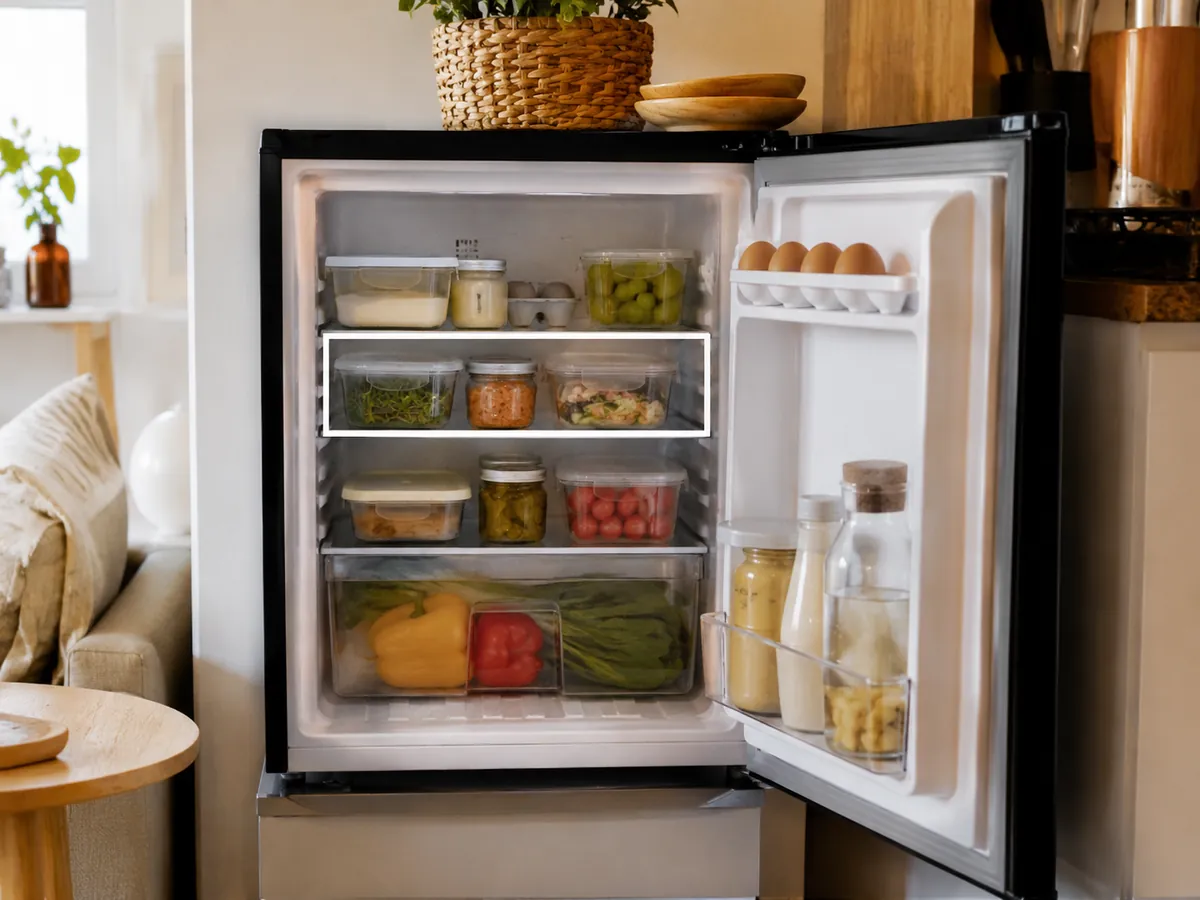
- Designate a visible use-first area for leftovers and foods you have chosen to prioritize after checking condition, date wording, and storage guidance.
- Choose a leftover prompt that fits the household instead of assuming a weekly clean-out meal will work.
These routines keep soon-to-expire food visible and give leftovers a planned use. Track what your household actually uses before assuming they will lower waste or grocery costs.
6. Confirm a Food-Scrap Destination
Separate food scraps or recyclables only after confirming a destination and its current acceptance rules. A countertop container is a collection method, not composting by itself.
Destination-first options:
- After checking accepted materials and storage guidance, use a suitable washable container sized for the available counter, refrigerator, or freezer space.
- Verify a municipal program, subscribed service, staffed drop-off, or other destination before collecting scraps for it; do not assume a community garden or farmers’ market accepts them.
- Separate recyclables only according to the local collector’s current rules and the building’s available system.
If your local program accepts the scraps and recyclables you separate, less of that material may remain in your regular trash.
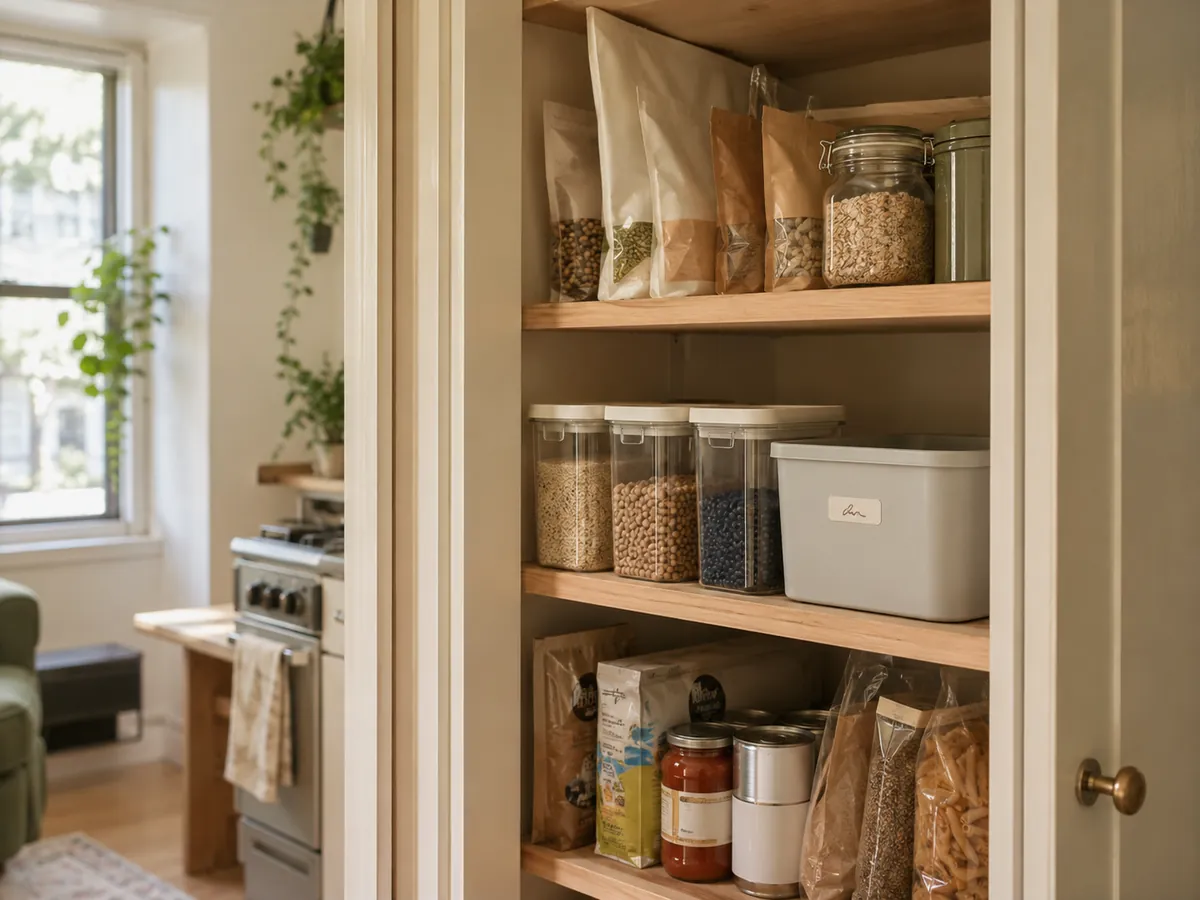
7. Make One Pantry Adjustment
A pantry change can make food easier to see, but this article should not duplicate the food-safety and package-information steps in the dedicated pantry guide.
Use the smallest useful adjustment:
- Review one shelf at a time if emptying the pantry would block the kitchen or make the task inaccessible.
- Create a few simple zones—breakfast, grains, snacks, baking, dinner basics—rather than overly complicated systems.
- Keep food in its package when that is the safest or easiest option; transfer it only to an intact, food-suitable container.
- Retain the food name plus relevant allergens, lot code, date wording, preparation, and storage directions.
This approach can be adapted to a single cabinet: use only as many zones and containers as the space and the food you actually keep require.
8. Replace a Tool Only When Needed
A reusable product is not automatically an improvement. Continue using a safe item that works, then evaluate a replacement when the current item is worn out or a documented need is unmet.
Possible replacements to evaluate:
- A dish brush or sponge that the user can grip, clean, dry, and replace as its directions require.
- A baking mat only when it is compatible with the pan, oven, food, temperature, and cleaning method.
- A knife and cutting board that are safe and comfortable for the user instead of specialty tools that would go unused.
Before buying, consider borrowing, repairing, or trying one item. Compare expected frequency of use, care effort, replacement parts, storage, accessibility, and end-of-life options rather than relying on an unnamed recommendation.
9. Compare a Lighting or Cooking Change
Energy use and cost depend on the equipment, utility rate, billing arrangement, and cooking pattern. Renters may not control fixtures or appliances.
Low-purchase checks:
- When a renter-controlled incandescent bulb needs replacement, compare a compatible LED’s rated output, energy use, lifetime, dimmer or fixture limits, price, and local disposal guidance.
- Use lids and cookware only as their manufacturers direct, and match them to the appliance and recipe rather than applying one cooking rule universally.
- Refrigerate perishable leftovers promptly. The FDA says hot food can go into the refrigerator and recommends dividing large amounts into shallow containers for faster cooling.
ENERGY STAR says well-designed LEDs are more efficient and typically last longer than incandescent lighting. That supports a product comparison, not a guaranteed household bill or emissions result.
How to Start Without Assuming Savings
If spending is constrained, begin with a no-purchase observation and choose only what is manageable:
- Note what is discarded or repeatedly unused without assigning blame, then decide whether a use-first area would help.
- Switch to rags and cloths made from old clothes.
- Adjust one pantry shelf with the packages and suitable containers already available.
- Check for a verified food-scrap destination before choosing a collection container.
Track actual purchase, utility, care, and replacement costs before calling a change a saving. There is no need to reinvest an assumed saving in another reusable product.
For package, date-label, allergen, lot-code, and container safeguards, use the small-apartment pantry guide.
Before buying a compost pail or system, diagnose the current setup with the small-space food-scrap odor and fruit-fly guide. It includes no-purchase counter, refrigerator, and freezer staging options alongside processing methods.
Evidence and Safety Boundaries
The US EPA’s household wasted-food guidance supports checking inventory, planning for meals actually eaten, buying usable quantities, and storing food appropriately. These practices can help; this article does not promise a result for an individual household.
For refrigeration, follow the FDA’s current cold-food safety guidance, the food package, and appliance instructions.
For printed dates, consult USDA FSIS food product dating guidance instead of treating every date as a universal discard deadline.
The lighting comparison is bounded by ENERGY STAR’s LED overview; compatibility, purchase cost, local electricity, billing, and actual use still determine the household result.
Found something we should correct?
Send the article title, the passage in question, and any supporting source through our contact page. Material corrections will be made transparently.